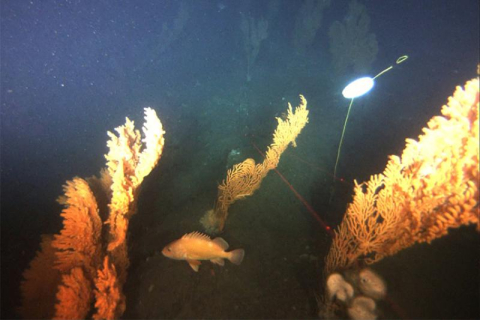
Modelling the Environmental Niche Space and Distributions of Cold-Water Corals and Sponges in the Canadian Northeast Pacific Ocean

Cold-water coral and sponge communities are important indicators of vulnerable marine ecosystems and are used to delineate areas for marine conservation and fisheries management. Here, we used a diverse set of environmental data layers (n=30) representing a range of bathymetric derivatives, physicochemical variables, and water column properties to assess the primary factors influencing the niche separation and potential distributions of six habitat-forming groups of cold-water coral and sponge in the northeast Pacific region of Canada
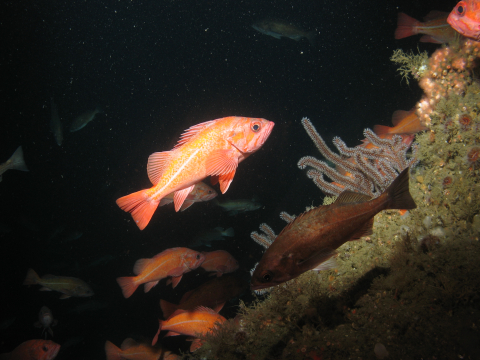
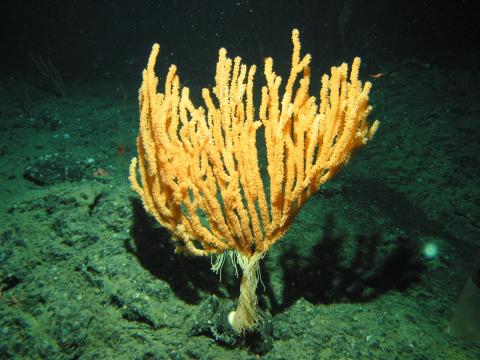
Diversity and Time-Series Analyses of Caribbean Deep-Sea Coral and Sponge Assemblages on the Tropical Island Slope of Isla de Roatán, Honduras

Shore-based submersible operations, from 2006 to 2020, have allowed us to examine megabenthic assemblages along the island margin of Isla de Roatán from depths of about 150 to 750 m, including repeated observations of the same organisms. These dives were used to photo-document a diverse benthic assemblage and observe the health and condition of the sessile fauna in a well-explored but relatively undocumented area of the Mesoamerican Reef.

Summary, Deep-Sea Corals Workshop: International Planning and Collaboration Workshop for the Gulf of Mexico and the North Atlantic Ocean, Galway, Ireland, January 16-17, 2003

coral reef biology; coral reef conservation; coral reef ecology; coral reefs and islands; corals; endangered ecosystems; habitat; international cooperation

This document summarizes the proceedings of the Deep-Sea Corals Workshop held in Galway, Ireland on January 16-17, 2003. The workshop was hosted by the Irish Marine Institute (MI) and organized by the U.S. National Oceanic and Atmospheric Administration (NOAA). This workshop builds on the growing collaboration between MI and NOAA under the Joint Statement of Understanding signed by the two institutions in 1995.

Subscribe to International