The Unknown and the Unexplored: Insights Into the Pacific Deep-Sea Following NOAA CAPSTONE Expeditions

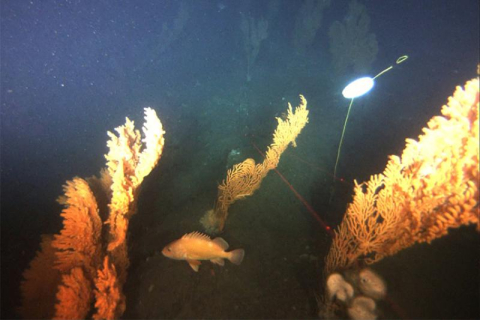
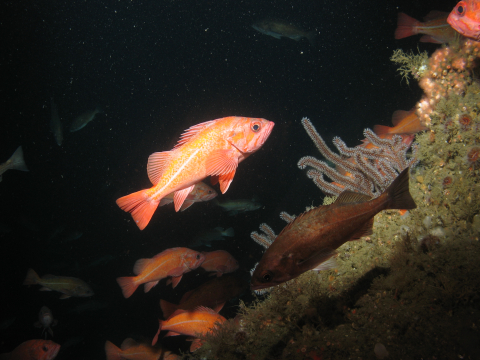
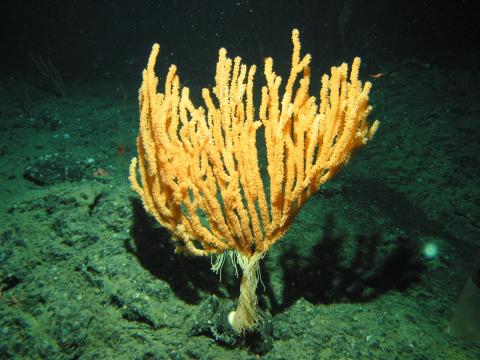
Over a 3-year period, the National Oceanic and Atmospheric Administration (NOAA) organized and implemented a Pacific-wide field campaign entitled CAPSTONE: Campaign to Address Pacific monument Science, Technology, and Ocean NEeds. Under the auspices of CAPSTONE, NOAA mapped 597,230 km2 of the Pacific seafloor (with ∼61% of mapped area located within US waters), including 323 seamounts, conducted 187 ROV dives totaling 891.5 h of ROV benthic imaging time, and documented >347,000 individual organisms.
CAPSTONE: Exploring the US Marine Protected Areas in the Central and Western Pacific

NOAA and its partners initiated CAPSTONE expeditions aboard Okeanos Explorer in July 2015. In addition to providing valuable information on the habitats and species in these MPAs, CAPSTONE also aims to contribute publicly accessible baseline data and critical information needed to respond to emerging regional issues such as deep-sea mining, sustainable deep-sea fisheries, and potential US ECS designation.

New Frontiers in Ocean Exploration: The E/V Nautilus, NOAA Ship Okeanos Explorer, and R/V Falkor 2017 Field Season

This publication is the eighth consecutive supplement on ocean exploration to accompany Oceanography. These booklets provide details about the innovative technologies deployed to investigate the seafloor and water column and explain how telepresence can both convey the excitement of ocean exploration to global audiences and allow scientists as well as the public on shore to participate in expeditions in real time. 

Subscribe to Ocean exploration