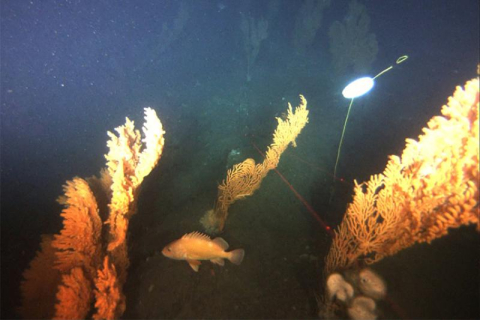
Science Plan for the Alaska Deep-Sea Coral and Sponge Initiative (AKCSI): 2020-2023

The purpose of this science plan is to outline a general strategy for the execution and completion of the most important research activities conducted under the Alaska Deep-Sea Coral and Sponge Initiative (AKCSI). The plan outlines the general approach and proposed research. Research projects supported by the 2020-2023 AKCSI will consist of the following:
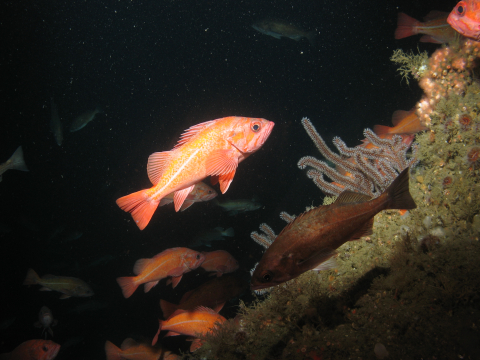
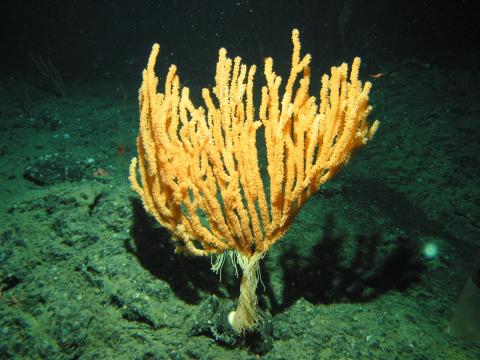
NOAA Live! Alaska Webinar 76 - Cold Dark Secrets: Discovering Alaska’s Deep-Sea Corals and Sponges

Did you know that corals live in the deep, cold waters of Alaska? Come learn about deep-sea corals and sponges, and their importance for underwater communities in Alaska. We will talk about how we study these cold water creatures, how they have adapted to this environment, and how they eat and grow. The webinar is about 60 minutes long with moderated questions and answers throughout. Aimed at grades 2-8, but all ages will enjoy. (Recorded on March 16, 2021) Pam Goddard, Vanessa Lowe, and Rachel Wilborn, NOAA Fisheries Alaska Fisheries Science Center Seattle, WA.

Deep Sea Coral Research and Technology Program 2020 Report to Congress

This report summarizes fiscal year 2018 and 2019 activities that supported management decisions, improved our understanding of deep-sea coral communities, and prioritized partnerships to enhance operational efficiency and effectiveness. Operating through NOAA Fisheries’ Office of Habitat Conservation, and funded at approximately $2.3 million annually to support national-scale research, the Program collaborates widely to cost-effectively study the role of corals in support of deep-sea ecosystems.

Deep-Sea Coral Research and Technology Program: Pacific Islands Deep-Sea Coral and Sponge Initiative Final Report

The Program, in partnership with NOAA Ocean Exploration, enabled a field research program in the Pacific Islands region between 2015–2017 that provided a first look at deep-sea coral and sponge ecosystems in the marine monuments throughout the region, and in other areas of interest such as hydrothermal vents and seeps, isolated seamounts, and mid-water biological and chemical characterization. This report covers the deep-sea coral and sponge research.

Subscribe to 2021