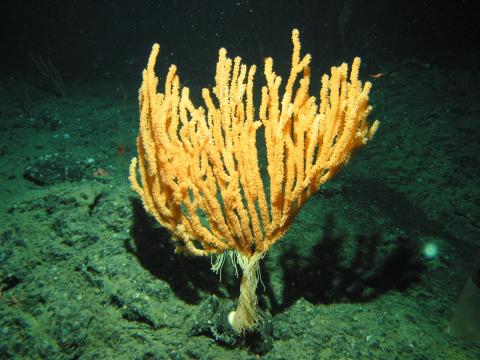
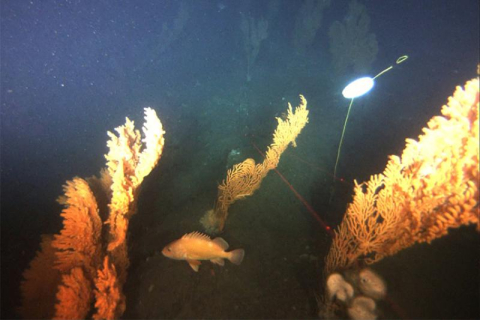
Southeastern United States Deep-Sea Corals (SEADESC) Initiative: A Collaboration to Characterize Areas of Habitat Forming Deep-Sea Corals

coral reef ecology; coral reefs and islands; habitat; marine ecology; marine ecosystem management; research

Off the southeastern United States coast and in the Gulf of Mexico there are several unique and productive deep-sea habitats that have been difficult to study with conventional methods because the bottom topography is very rugged and overlain by strong currents (e.g., Gulf Stream). This project was conceived from a need to better document and understand these ecosystems and to rapidly provide research data that are generally not otherwise available.
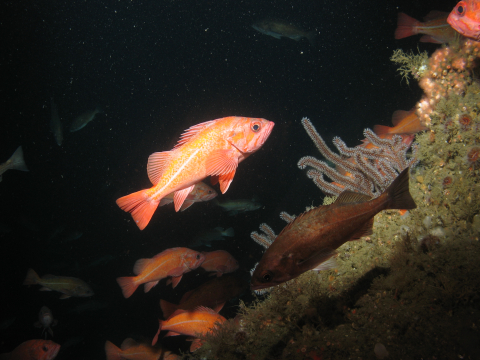
 

Calcaxonian octocorals (Cnidaria; Anthozoa) from eastern Pacific seamounts

Calcaxonian octocorals, Pacific, seamounts

Eleven calcaxonian gorgonians are reported from seamounts in the Northeast Pacific, including eight new records for this region, six of which are described as new species. Twenty-one calcaxonians are now known from the Northeast Pacific (exclusive of Alaska). A table of comparisons is given for all six species of Parastenella and the three eastern Pacific species of Calyptrophora. A neotype is designated for Chrysogorgia fruticosa.

The State of Deep Coral Ecosystems of the United States, 2007

This report represents the first effort by the National Oceanic and Atmospheric Administration (NOAA),
in partnership with other federal, academic and non-governmental partners, to bring together available
information on the abundance and distribution of structure-forming corals that occur in U.S. waters at
depths greater than 50 m.

Coral Reef Conservation, Coral Reef Ecology, Coral Reef Management, Corals, Deep-sea Biology, Habitat

Subscribe to 2007