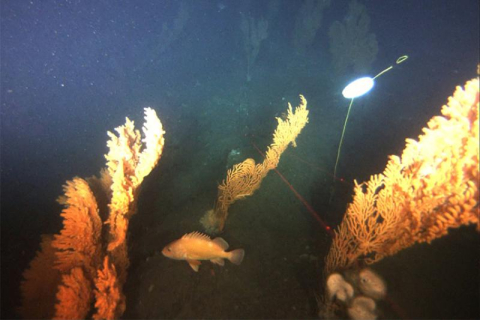
Science Plan for the Alaska Deep-Sea Coral and Sponge Initiative (AKCSI): 2020-2023

The purpose of this science plan is to outline a general strategy for the execution and completion of the most important research activities conducted under the Alaska Deep-Sea Coral and Sponge Initiative (AKCSI). The plan outlines the general approach and proposed research. Research projects supported by the 2020-2023 AKCSI will consist of the following:
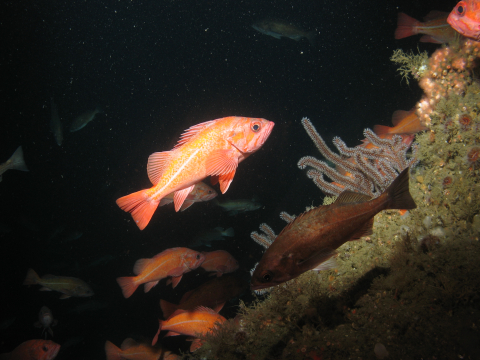
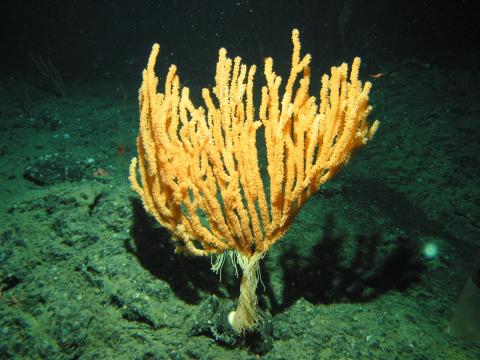
Research Priorities Workshop Report for the DSCRTP West Coast Research Initiative 2018-2021

The National Oceanic and Atmospheric Administration Deep Sea Coral Research and Technology Program’s convened a 2-day science priorities workshop on April 16-17, 2018 at the University of California, Santa Barbara. The purpose of the workshop was to build partnerships and set research priorities for the Program’s 4-year West Coast Deep-Sea Coral Initiative (WCDSCI; 2018-2021).

West Coast Deep-Sea Coral Initiative Science Plan (2018-2021)

This Science Plan presents the objectives, proposed work-plan, and anticipated outcomes for the National Oceanic and Atmospheric Administration West Coast Deep-Sea Coral Initiative under the Deep Sea Coral Research and Technology Program. The four-year Initiative (FY 2018-2021) is designed to work with partners to discover, map, characterize, explore, and conduct research on deepwater coral and sponge habitats in support of natural resource management off California, Oregon and Washington.

CAPSTONE: Exploring the US Marine Protected Areas in the Central and Western Pacific

NOAA and its partners initiated CAPSTONE expeditions aboard Okeanos Explorer in July 2015. In addition to providing valuable information on the habitats and species in these MPAs, CAPSTONE also aims to contribute publicly accessible baseline data and critical information needed to respond to emerging regional issues such as deep-sea mining, sustainable deep-sea fisheries, and potential US ECS designation.

Marine Biogeographic Assessment of the Main Hawaiian Islands

The Bureau of Ocean Energy Management partnered with the National Oceanic and Atmospheric Administration’s National Centers for Coastal Ocean Science to gather biogeographic information in support of this evaluation around the Main Hawaiian Islands . The complexity of products from this assessment range from simple animal distribution maps to mathematical models depicting the predicted distributions of animals.

Mesophotic and Deep Sea Corals in the Gulf of Mexico – Impacts from Deepwater Horizon: Bibliography

NOAA’s Office of Habitat Conservation (OHC) in the National Marine Fisheries Service is participating in an Open Ocean Trustee Implementation Group studying marine life in the Gulf of Mexico and the impact of the Deepwater Horizon (DWH) oil spill on that life. The NOAA Central Library was consulted to create this annotated bibliography to provide OHC with literature on the mesophotic and deep sea corals in the Gulf of Mexico. In particular this bibliography covers the impacts of the DWH oil spill, mapping and restoration techniques for those coral communities. 

NOAA Deep-sea Coral and Sponge Ecosystems Exploration and Research Priorities Workshop for the U.S. West Coast, Portland, Oregon, January 20-21, 2010

coral reef ecology; deep-sea corals; management; marine ecosystem management; sponges

On January 20-21, 2010, scientists and resource managers met in Portland, Oregon to further define the exploration and research priorities laid out in the NOAA Strategic Plan for Deep-Sea Coral and Sponge Ecosystems, and to identify critical information needs for deep-sea coral and sponge ecosystems off the U.S. West Coast. The ultimate goal of the workshop was to identify steps to improve the understanding, conservation, and management of these ecosystems.

New Frontiers in Ocean Exploration: The E/V Nautilus, NOAA Ship Okeanos Explorer, and R/V Falkor 2017 Field Season

This publication is the eighth consecutive supplement on ocean exploration to accompany Oceanography. These booklets provide details about the innovative technologies deployed to investigate the seafloor and water column and explain how telepresence can both convey the excitement of ocean exploration to global audiences and allow scientists as well as the public on shore to participate in expeditions in real time. 

Summary, Deep-Sea Corals Workshop: International Planning and Collaboration Workshop for the Gulf of Mexico and the North Atlantic Ocean, Galway, Ireland, January 16-17, 2003

coral reef biology; coral reef conservation; coral reef ecology; coral reefs and islands; corals; endangered ecosystems; habitat; international cooperation

This document summarizes the proceedings of the Deep-Sea Corals Workshop held in Galway, Ireland on January 16-17, 2003. The workshop was hosted by the Irish Marine Institute (MI) and organized by the U.S. National Oceanic and Atmospheric Administration (NOAA). This workshop builds on the growing collaboration between MI and NOAA under the Joint Statement of Understanding signed by the two institutions in 1995.

Subscribe to Other reports