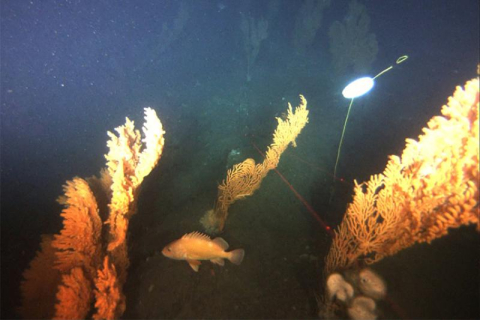
Science Plan for the Alaska Deep-Sea Coral and Sponge Initiative (AKCSI): 2020-2023

The purpose of this science plan is to outline a general strategy for the execution and completion of the most important research activities conducted under the Alaska Deep-Sea Coral and Sponge Initiative (AKCSI). The plan outlines the general approach and proposed research. Research projects supported by the 2020-2023 AKCSI will consist of the following:
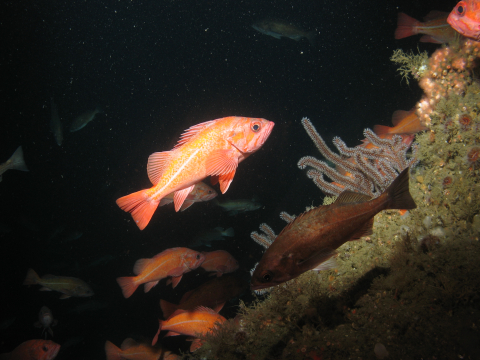
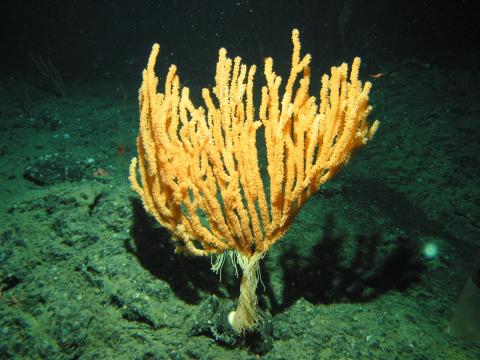
NOAA’s National Database for Deep-Sea Corals and Sponges: 2020 Status Update

The National Oceanic and Atmospheric Administration's Deep Sea Coral Research and Technology Program compiles, curates, and makes public a National Database of biogeographic data and information on deep-sea corals and sponges. This report details developments and enhancements to the database since it became accessible through the online portal in 2015.

Research Priorities Workshop Report for the DSCRTP West Coast Research Initiative 2018-2021

The National Oceanic and Atmospheric Administration Deep Sea Coral Research and Technology Program’s convened a 2-day science priorities workshop on April 16-17, 2018 at the University of California, Santa Barbara. The purpose of the workshop was to build partnerships and set research priorities for the Program’s 4-year West Coast Deep-Sea Coral Initiative (WCDSCI; 2018-2021).

West Coast Deep-Sea Coral Initiative Science Plan (2018-2021)

This Science Plan presents the objectives, proposed work-plan, and anticipated outcomes for the National Oceanic and Atmospheric Administration West Coast Deep-Sea Coral Initiative under the Deep Sea Coral Research and Technology Program. The four-year Initiative (FY 2018-2021) is designed to work with partners to discover, map, characterize, explore, and conduct research on deepwater coral and sponge habitats in support of natural resource management off California, Oregon and Washington.

NOAA West Coast Deep-Sea Coral Initiative 2018-2021: Final Report

This report summarizes the objectives, accomplishments, and outcomes of NOAA's West Coast Deep-Sea Coral Initiative, funded by the Deep Sea Coral Research and Technology Program. The four-year initiative (2018-2021) was designed to explore, map, characterize, and conduct research on deep-sea coral and sponge habitats in the Pacific Fishery Management Council region, inclusive of waters off California, Oregon, and Washington.

Deep Sea Coral Research and Technology Program 2022 Report to Congress

This report summarizes fiscal year 2020 and 2021 activities that supported management decisions, improved our understanding of deep-sea coral and sponge communities, and leveraged partnerships to enhance operational efficiency and effectiveness. Operating through NOAA Fisheries’ Office of Habitat Conservation, and funded at approximately $2.3 million annually to support national-scale research, the Program collaborates widely and leverages substantial funding to study the role of corals in support of deep-sea ecosystems.

Deep Sea Coral Research and Technology Program 2020 Report to Congress

This report summarizes fiscal year 2018 and 2019 activities that supported management decisions, improved our understanding of deep-sea coral communities, and prioritized partnerships to enhance operational efficiency and effectiveness. Operating through NOAA Fisheries’ Office of Habitat Conservation, and funded at approximately $2.3 million annually to support national-scale research, the Program collaborates widely to cost-effectively study the role of corals in support of deep-sea ecosystems.

Expedition Cruise Report: EX-16-06. 2016 Deepwater Wonders of Wake (ROV/Mapping)

In August of 2016, NOAA Ship Okeanos Explorer conducted the first-ever deepwater exploration of the Wake Atoll Unit of the Pacific Remote Islands Marine National Monument. In total, the ship conducted 14 ROV dives ranging from 350 to 3,136 meters depth. All explored seamounts are flat-topped guyots with mainly pillow lavas coated in ferromanganese crust exposed on their lower flanks. 

Subscribe to Reports